
Short answer: Pool coping replacement in El Cajon should be considered when coping is cracked, loose, lifting, badly weathered, or allowing water to reach the edge of the pool. Small surface defects do not always require a full remodel, but movement, open joints, repeated cracking, or damage near the bond beam deserve an onsite assessment. In El Cajon and nearby East County communities, the right scope depends on the coping material, the condition underneath it, drainage around the deck, and whether the pool also needs tile or plaster work.
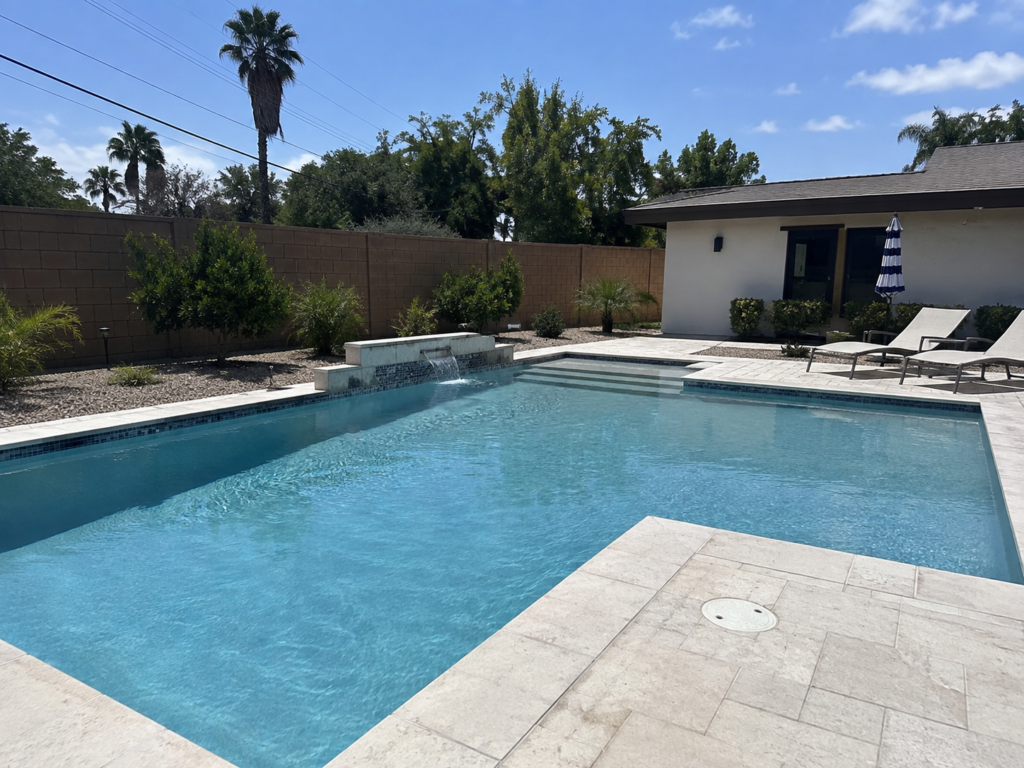
Coping is the finished edge between the pool shell and the surrounding deck. It frames the pool, helps direct water away from the shell, and is one of the areas swimmers touch most often. Crystal Vista Pool Tech Inc. provides pool coping and waterline tile replacement for residential and commercial pools in El Cajon and nearby San Diego County communities.
What does pool coping do?
Pool coping is the cap or finished edge installed around the top perimeter of an in-ground pool. It creates a transition between the pool interior and the deck, provides a finished surface at the waterline, and helps separate the pool shell from runoff on the deck. The coping itself is not a substitute for structural repairs or proper drainage, so a visible problem at the edge should be evaluated in context.
At a service visit, a contractor may need to look at the coping, the joint between coping and deck, the waterline tile, the bond beam, and any nearby plaster or finish. These pieces can affect one another. Replacing only the most visible piece may not solve the problem if the supporting surface has moved or if water is getting behind the edge.
Should you repair or replace pool coping?
Repair may be reasonable when the defect is limited, the coping is still firmly bonded, adjacent pieces are stable, and the underlying structure does not show signs of movement. A repair is not a diagnosis from a photograph; the material, extent of damage, and cause all matter.
Replacement is more likely when multiple pieces are cracked or loose, the edge has lifted, joints keep opening, the material has deteriorated across a run, or repairs would leave an uneven or unsafe transition. Replacement can also make sense when the owner is already planning waterline tile replacement or a pool replaster, because the scope may be coordinated while the pool is prepared for the larger project.
| What you notice | Possible direction | Why an assessment matters |
|---|---|---|
| One small, stable surface defect | Localized repair may be considered | The contractor needs to confirm the piece is bonded and the surrounding area is stable. |
| Loose, lifting, or rocking coping | Replacement and substrate inspection | Movement can indicate a problem below the visible finish. |
| Repeated cracks or open joints | Investigate the cause before patching | New repairs may fail if movement, drainage, or bond-beam damage is not addressed. |
| Worn coping plus dated tile or plaster | Coordinate a broader remodel scope | Related work may be more practical to plan together than in separate visits. |
What are the warning signs of failing pool coping?
- Pieces that rock, lift, or sound hollow when assessed by a professional
- Cracks that extend through a piece or continue to return after repair
- Open or deteriorated joints between coping, deck, or tile
- Sharp edges, loose fragments, or a transition that could catch bare feet
- Water staining, efflorescence, or visible moisture near the pool edge
- A noticeable change in height between adjacent pieces
- Water pooling on the deck or draining toward the pool edge
These signs do not identify one guaranteed cause. Settlement, material movement, failed joints, drainage, freeze-thaw exposure in some settings, and underlying structural conditions can produce overlapping symptoms. In El Cajon, local heat, sun exposure, evaporation, and mineral-heavy water are conditions the business identifies as relevant to pool upkeep, but an onsite review is still needed for a specific pool.
How do coping materials affect the project?
Common coping choices include poured concrete, natural stone, precast pieces, brick, and pavers. Each has different profiles, textures, edge details, maintenance needs, and compatibility considerations. The best choice is not universal: it should work with the deck, tile, pool finish, drainage, and the way the pool is used.
- Poured concrete: a clean, flexible design direction that can be formed to the pool edge.
- Natural stone: offers a distinct appearance and surface character; the selected stone and finish matter.
- Precast coping: provides repeatable profiles and colors when the available shape fits the pool.
- Brick or pavers: can suit traditional detailing, but the layout and joints need to work with the existing deck.
Material descriptions above are general education, not a recommendation for a particular pool. Crystal Vista Pool Tech’s existing service page lists poured concrete, natural stone, precast, brick, and paver options and notes that coping work may be coordinated with waterline tile, bond-beam inspection or repair, sealing, and deck restoration.
When should coping be coordinated with tile or plaster?
Coping and waterline tile are often visually connected, and a worn edge may make the entire pool perimeter look dated even when the pool shell is sound. If the pool also has a rough, chalky, stained, or flaking finish, compare the scope with the existing pool plastering and resurfacing guide before choosing a finish-only project.
Coordination does not mean every pool needs a full remodel. It means the estimate should explain which components are actually affected, what can remain, and what order the work should follow. For a commercial pool, HOA, or managed property, the discussion should also cover access, user safety, site protection, and how the work fits the property’s operating needs.
Planning a coping or waterline tile project in El Cajon? Review Crystal Vista Pool Tech’s pool coping and tile replacement service or call (619) 245-9977 to request an assessment. A quote should be based on the actual pool and requested scope.
What should a professional coping visit include?
- Document the symptoms. Note where pieces are loose, cracked, uneven, stained, or separating from the deck.
- Inspect the perimeter. The visit should consider coping, joints, waterline tile, the deck edge, drainage, and visible portions of the supporting structure.
- Separate condition from preference. The estimate should distinguish needed repair from optional design changes.
- Define the scope. It should state whether the work is localized or extends around the pool, which materials are included, and whether tile, plaster, sealing, or deck work is separate.
- Explain preparation and protection. Ask how surrounding surfaces, access paths, landscaping, and the pool interior will be protected.
- Set maintenance expectations. Material care, joint maintenance, water management, and post-project instructions should be explained without promising a universal service life.
What should homeowners avoid?
- Do not glue, wedge, or reset loose coping as a permanent fix without understanding why it moved.
- Do not ignore sharp edges or unstable pieces around an active swimming area.
- Do not assume a stain or open joint proves a leak or structural failure; those require assessment.
- Do not choose a material from a photo alone. Texture, heat, drainage, color variation, and compatibility with the existing deck matter.
- Do not accept an estimate that bundles coping, tile, plaster, and deck work without identifying what each line includes.
- Do not drain or alter pool equipment yourself when the work could involve electrical, plumbing, structural, or water-management risks.
Frequently asked questions about pool coping replacement
Can cracked pool coping be repaired?
Sometimes. A limited, stable defect may be repairable, but recurring cracks, loose pieces, movement, or damage across several sections usually warrant a broader inspection before choosing repair.
Does pool coping replacement require replastering?
Not always. Coping can be a separate project, although it may be coordinated with waterline tile or replastering when those surfaces also need work. The estimate should explain whether the scopes are independent or connected.
How do I choose between stone, concrete, precast, brick, and pavers?
Compare the material’s appearance, texture, edge profile, maintenance, compatibility with the existing deck and tile, and suitability for the pool’s drainage and use. A site-specific recommendation is more reliable than a universal “best” material.
Is loose coping a safety concern?
It can be. Loose, lifting, sharp, or uneven coping can create a trip or contact hazard at the pool edge. Keep people away from unstable areas and arrange a professional assessment rather than relying on a temporary patch.
Do you serve areas outside El Cajon?
Crystal Vista Pool Tech states that it serves El Cajon and nearby cities in San Diego County, including residential, commercial, HOA, and managed-property work. Confirm project fit and service availability when you contact the company.
Sources and further reading
This article is general education and does not replace an onsite evaluation. For pool water and safety information, see the CDC guidance on home pool and hot tub water treatment and testing. For water efficiency and evaporation considerations, see the EPA WaterSense pool water efficiency guidance. For industry standards context, see the Pool & Hot Tub Alliance standards information.
Request a coping assessment in El Cajon
Whether you are seeing one cracked piece or planning a larger pool renovation, the next useful step is to document the condition and request a scope based on the actual pool. Crystal Vista Pool Tech Inc. provides pool coping and waterline tile replacement in El Cajon and nearby San Diego County communities. Visit the contact page, review the service list, or call (619) 245-9977.
